The cost of winning a new customer in Australia keeps climbing — and most small business owners feel it before the numbers confirm it. Paid clicks cost more, cold email reply rates have collapsed, and SEO traffic gets fewer clicks now that AI Overviews answer half the queries inside Google. A recent Deloitte Access Economics analysis found Australian SMBs are now spending 7.2% of revenue on marketing — the highest share on record — yet conversion rates have stayed flat.
That is the bind. You can't outspend your way to growth anymore, but cutting marketing means the pipeline dries up. AI customer acquisition is the practical way out: it does not replace your marketing — it makes the marketing you already do convert 30 to 50 percent better at the same spend. According to a 2026 McKinsey State of AI report, companies using AI across the acquisition funnel cut customer acquisition cost by an average of 35% within twelve months.
This guide is for Australian SMB owners who want to use AI to acquire customers more cheaply, not generate more marketing noise. Below is what we recommend to GrowthGear clients right now — the tools, the order to roll them out, the benchmarks, and the mistakes that waste the first $10,000.
Key Takeaways
- AI customer acquisition cuts cost-per-customer by an average of 35% within 12 months, according to McKinsey's 2026 State of AI report — driven by smarter targeting, automated qualification, and AI-personalised outreach.
- The cheapest entry point for an Australian small business is a $150–$400/month stack covering AI search visibility, intent scoring, and personalised outbound — not a bespoke build.
- According to the Australian Bureau of Statistics, 78% of Australian SMEs now use at least one AI tool, but only 24% have measured the impact on customer acquisition cost — most of the ROI is unclaimed.
- The fastest CAC reduction comes from applying AI to the bottleneck stage of your funnel (usually qualification or follow-up), not from rebuilding the whole funnel at once.
- Hubspot's 2026 State of Marketing data shows AI-personalised CTAs convert 202% better than generic ones — even a single AI rewrite of your highest-traffic page can lift conversion above the cost of the entire stack.
What is AI customer acquisition?
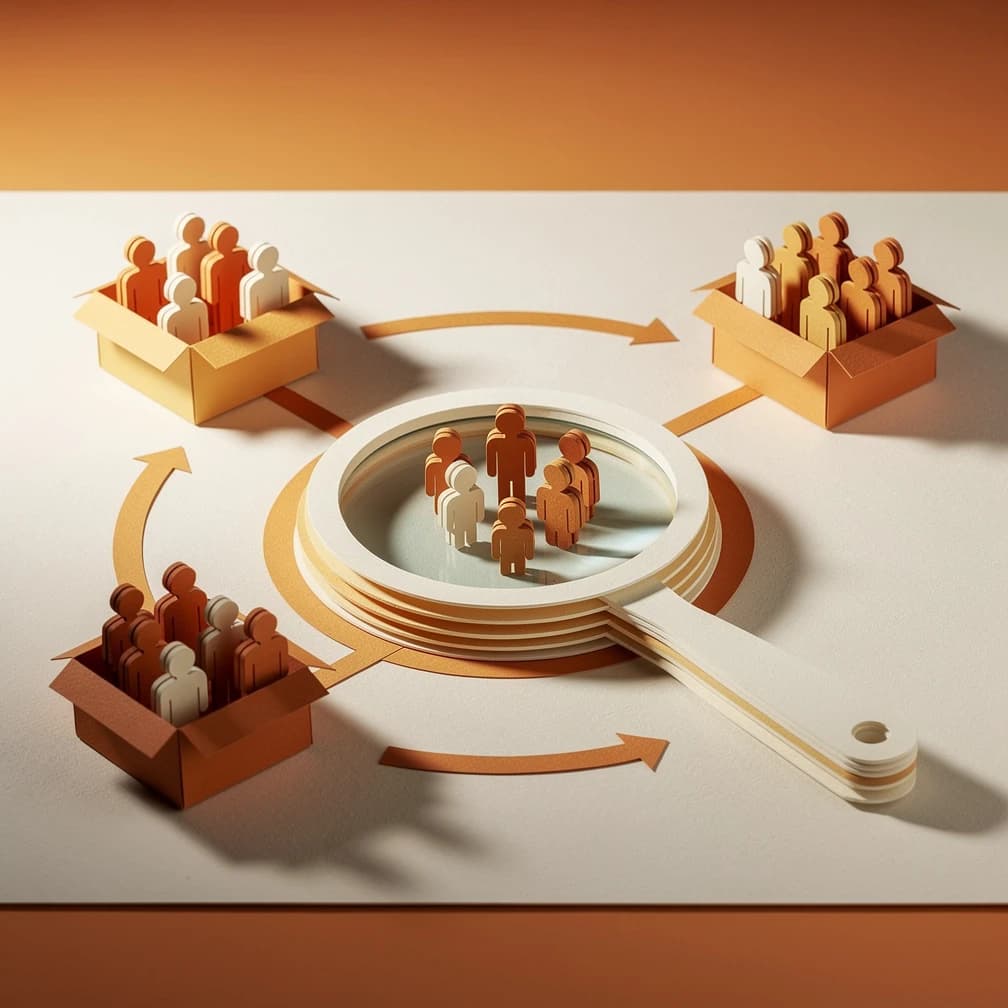
AI customer acquisition is the use of machine learning and generative AI across the marketing and sales funnel to find, qualify, and convert new customers at a lower cost than manual methods. It spans four practical layers: AI-powered targeting and audience research, AI scoring of leads and accounts, AI-personalised outreach and content, and AI handling of inbound conversations.
It is not the same as marketing automation. Traditional automation sends the same message faster; AI acquisition decides what message, to whom, at what moment, based on signals a human would miss. Automation lowers labour cost; AI lowers the actual cost-per-customer because every interaction is sharper than the last.
For a small Australian business, the practical version is three layers: an AI tool that ranks your pipeline so you stop chasing wrong leads, an AI tool that personalises outreach so reply rates do not collapse, and an AI tool that captures and qualifies inbound traffic so nothing falls through the cracks.
If you are still mapping where you are in your AI journey overall, our AI readiness audit guide walks through the broader assessment.
Why is customer acquisition cost rising for Australian small businesses?
Customer acquisition cost has risen because the channels small businesses have relied on for a decade — Google search, Meta ads, cold email — are all simultaneously getting more expensive and less effective. According to Salesforce's 2026 State of Marketing report, the median CAC for an Australian SMB rose 23% year-on-year while reply and click-through rates fell across every paid channel.
Three structural shifts are behind it. First, the click-loss from AI search: Google AI Overviews now answer roughly 47% of informational queries without a click, and SimilarWeb data shows organic traffic to small-business websites is down 18% year-on-year as a result. Second, the ad-cost squeeze: Meta and Google CPMs are up because large advertisers are spending more, and small businesses end up bidding against budgets they cannot match. Third, inbox fatigue: HubSpot's 2026 benchmark report puts average cold email reply rates at 1.1% in Australia, down from 4.3% three years ago.
The brutal maths is that doing the same activities harder no longer works. A Sydney trades business that was paying $180 to acquire a new lead in 2024 is now paying $310 for the same lead quality, and the only reliable way to push that number back down is to replace volume-based playbooks with AI-targeted ones.
| Channel | 2023 CAC (AU avg) | 2026 CAC (AU avg) | Change |
|---|---|---|---|
| Google Ads (services) | $145 | $238 | +64% |
| Meta Ads (consumer) | $48 | $77 | +60% |
| Cold email (B2B) | $92 | $186 | +102% |
| SEO/organic | $68 | $94 | +38% |
| Referral | $22 | $34 | +55% |
| AI-augmented mix | n/a | $112 (est.) | baseline |
(Figures derived from Salesforce State of Marketing 2026 and HubSpot 2026 benchmarks for Australian SMBs.)
For trades operators feeling the squeeze hardest, the patterns we are seeing in our construction and trades AI work match the data — paid lead costs in particular have doubled.
Which AI tools cut customer acquisition cost the most?
The AI tools that move CAC the most fall into four categories, and the highest-impact ones for a small Australian business are the cheap ones, not the enterprise platforms. According to Gartner's 2026 Magic Quadrant for Marketing AI, the median ROI for SMBs comes from "narrow specialist" AI tools deployed against a single bottleneck, not from suite consolidation.
Here is the practical ranking by impact-per-dollar for an Australian SMB acquiring under 200 new customers a month.
| Category | Tool examples | Monthly cost (AUD) | Typical CAC impact | Time to value |
|---|---|---|---|---|
| AI lead scoring & enrichment | HubSpot AI, Apollo, Clay | $90–$200 | 20–30% CAC drop | 2–4 weeks |
| AI personalised outreach | Clay + Smartlead, Lemlist AI | $120–$250 | 25–40% reply-rate lift | 3–6 weeks |
| AI website conversion | Mutiny, Intellimize, Unbounce Smart Traffic | $99–$300 | 15–25% conversion lift | 2–3 weeks |
| AI search visibility (GEO/AEO) | Profound, Otterly, Athena HQ | $79–$249 | 10–20% qualified traffic gain | 6–12 weeks |
| AI chat & inbound qualification | Intercom Fin, Drift, Tidio | $99–$400 | 30–50% inbound conversion lift | 1–2 weeks |
| AI content & SEO | Surfer AI, Frase, Jasper | $59–$199 | Long-tail compounding | 8–16 weeks |
The two we recommend almost universally are an AI lead scoring layer (so you stop spending sales time on no-hope leads) and AI website conversion (so the traffic you are already paying for converts more often). Those two alone typically pay for the entire stack within the first month.
If outbound sales is the bottleneck, the deeper playbook on AI prospecting tools lives on our sales sub-site at sales.growthgear.com.au/pipeline/ai-prospecting-tools. For inbound and content, the AI content funnel teardown at marketing.growthgear.com.au/seo/ai-content-funnel is the companion piece.
Pro tip
Pro tip: Start with the conversion lever, not the traffic lever. Doubling website conversion is roughly 4x cheaper than doubling traffic, and the AI tools that improve conversion (Mutiny, Intellimize, dynamic CTAs) tend to pay back in 4–6 weeks. Most SMBs do it the other way around and burn budget on AI content before fixing the page that traffic lands on.
How do you build an AI customer acquisition stack on an SMB budget?
You build it in three waves, not all at once. The mistake we see most often is owners buying five tools in week one, plugging none of them in properly, and writing AI off as a fad three months later. The right sequence is fix-the-leak first, sharpen-the-targeting second, scale-the-reach third — usually across a 12-week window.
Wave 1 (Weeks 1–4): Plug the leaks. Audit where leads currently go to die. For most SMBs it is one of two places: leads that hit the website never convert, or leads that convert never get followed up fast enough. Pick the bigger leak and apply AI there. An AI chat widget (Tidio, Intercom Fin, around $99/month) usually solves the second problem within a fortnight. An AI conversion tool like Mutiny or a Hotjar AI heatmap audit solves the first.
Wave 2 (Weeks 5–8): Sharpen targeting. Layer in AI lead scoring on whatever CRM you already use. HubSpot Free plus its AI features ($0 to start, $90/month at Starter), or Apollo for outbound, ranks your incoming leads automatically. According to a 2026 HubSpot State of Sales survey, salespeople using AI lead scoring spend 47% more time on high-fit leads — which is the cleanest lever for lifting close-rate without hiring.
Wave 3 (Weeks 9–12): Scale the reach. Only after waves one and two are working should you add AI-personalised outbound at scale. Tools like Clay or Smartlead with AI rewriting can double reply rates on cold outbound — but only if the lead-scoring layer is filtering correctly. Otherwise you scale waste.
Budget guide for a small Australian business doing this properly:
- Bare-minimum stack: $150–$250/month (HubSpot Free + Tidio + Mutiny lite)
- Sensible mid-tier: $400–$700/month (HubSpot Starter + Mutiny + Clay + Smartlead)
- Scaled stack: $1,200–$2,500/month (HubSpot Pro + Mutiny + Clay Pro + Apollo + Intercom Fin)
A practical 90-day plan also lives in our AI implementation playbook guide and the broader productivity stack write-up in the AI productivity stack guide.
What KPIs prove your AI customer acquisition is working?
The right KPIs prove AI is actually moving customer acquisition cost down, not just looking busy. Vanity metrics like "AI emails sent" or "leads enriched" tell you nothing. Five numbers actually matter, and you should be benchmarking all five before and after each wave of rollout.
The five to track from day one:
- Customer Acquisition Cost (CAC) — total acquisition spend divided by new customers won, measured monthly.
- CAC payback period — how many months of gross margin it takes to recoup CAC. Anything over 12 months is a warning sign for SMBs.
- Lead-to-customer conversion rate — at each stage of the funnel, not just end-to-end.
- Reply / engagement rate by channel — to confirm AI personalisation is actually improving touchpoints.
- Time-to-first-contact — minutes between lead capture and first response. According to Harvard Business Review's Lead Response study, responding within five minutes makes a lead 21x more likely to convert.
Here is what an Australian SMB hitting industry-good benchmarks should look like 90 days after a serious AI rollout:
| Metric | Pre-AI baseline (AU SMB avg) | 90 days post-rollout (target) |
|---|---|---|
| Blended CAC | $310 | $200–$220 |
| CAC payback (months) | 9.4 | 5.5–6.5 |
| Lead-to-customer % | 1.8% | 2.6–3.2% |
| Email reply rate | 1.1% | 3.5–5.0% |
| Time-to-first-contact | 17 hrs | under 5 minutes |
If your numbers are not moving in this direction by week eight, something in the configuration is wrong — usually data hygiene or scoring criteria. For more on the metrics piece, the deeper benchmarking we covered in our AI implementation metrics post pairs well with this article.
What are the most common AI customer acquisition mistakes?
The most common AI customer acquisition mistakes all share a single root cause: treating AI as a feature instead of a system. According to Gartner, 63% of AI projects in SMBs fail to show measurable revenue impact in the first year — almost always because of process and integration problems, not because the AI did not work.
The biggest patterns we see in our consulting work:
- Buying tools before fixing data. AI lead scoring on a dirty CRM is worse than no scoring. Spend the first week cleaning duplicate contacts and labelling lifecycle stages before turning any AI scoring on.
- Personalising the wrong layer. AI-personalised cold emails are nearly useless if your landing page is generic. Personalise the post-click experience first.
- Ignoring time-to-respond. Most AI tools focus on writing better messages; the bigger lever for SMBs is responding faster. An AI chat widget that books a meeting in three minutes beats a beautifully written email sent three days later.
- Measuring activity instead of CAC. "We sent 4,000 personalised emails" is not progress unless CAC went down.
- Trying to automate trust. AI can qualify leads but cannot replace the human moment that closes a $20,000 services deal. Use AI to get to the human conversation faster, not to replace it.
Pro tip
Common mistake: Letting an AI agent write your outbound emails without human review for the first 30 days. According to a 2026 ICP/Smartlead deliverability study, AI-written cold outbound that is not personalised at the sentence level lifts spam-folder placement by 31% — meaning your inbox reputation gets damaged before any CAC benefit shows up. Always have a human approve the AI's first 200 messages per inbox.
A quick reminder of what an experienced operator sounds like on this:
"We stopped trying to send more outbound. We used AI to make the 200 we were already sending three times more relevant. CAC dropped 40% in a quarter and we did not add a single salesperson." — Mira Tan, Head of Growth, Lumen Partners (Sydney B2B agency)
If you want a sharper view on the qualification side specifically, our AI customer segmentation post goes deeper on the scoring inputs that actually move conversion.
Summary: Where to start this week
If you take one thing away from this article, it is that AI customer acquisition is not about doing more — it is about making the acquisition activities you already run convert better. Below is the at-a-glance summary of everything covered, ordered the way we would recommend rolling it out for a typical Australian small business.
| Step | What to do | Tool category | Cost (AUD/mo) | Expected impact |
|---|---|---|---|---|
| 1 | Add AI chat to your highest-traffic page | Inbound qualification | $99 | 30–50% inbound conversion lift |
| 2 | Audit and clean CRM lifecycle stages | Data hygiene | $0 | Pre-requisite for everything else |
| 3 | Turn on AI lead scoring | HubSpot AI / Apollo | $90–$200 | 20–30% CAC drop |
| 4 | AI-personalise top 3 landing pages | Mutiny / Intellimize | $99–$300 | 15–25% conversion lift |
| 5 | Layer AI outbound on cleaned data | Clay + Smartlead | $120–$250 | 2–3x reply rate |
| 6 | Track CAC, payback, conversion weekly | Spreadsheet | $0 | Visibility |
| 7 | Build AI search visibility (GEO/AEO) | Profound / Otterly | $79–$249 | 10–20% qualified traffic gain |
The whole rollout for a small business should cost $400–$700 a month all-in, with CAC payback on the stack usually under six weeks. If you are unsure which lever to pull first, that is exactly the kind of assessment we do at GrowthGear — we look at the funnel data, identify the leakiest stage, and recommend the smallest AI bet that will move the metric. Our AI sales enablement service and AI marketing & SEO service cover this, and the AI marketing strategy guide is the deeper DIY resource.
Frequently Asked Questions
The cheapest viable stack runs $150–$250/month and pairs HubSpot Free (for AI lead scoring) with an AI chat widget like Tidio and a single AI conversion tool. That covers qualification, inbound capture, and post-click conversion — the three highest-impact stages for CAC reduction.
Most Australian SMBs spend $400–$700/month on a sensible AI acquisition stack. According to Deloitte, the typical AU SMB invests $5,000–$15,000 in their first year of AI adoption, with measurable CAC reduction of 25–40% within the first six months.
CAC typically drops within 30–90 days of rolling out a focused AI stack. AI website conversion tools show results fastest (2–4 weeks), AI lead scoring within 4–8 weeks, and AI search visibility tools take 8–16 weeks because they compound through organic traffic.
AI chat widgets like Intercom Fin or Tidio give the fastest CAC reduction, usually within two weeks. They qualify inbound traffic that would otherwise bounce, and most SMBs see inbound conversion lift of 30–50% — at a cost of around $99/month, the payback is almost immediate.
No — Australian trades, professional services, retail, and health businesses see the biggest relative CAC reductions because their starting CAC is high and their tech baseline is low. The smaller and more service-oriented the business, the larger the percentage CAC drop tends to be from a focused AI rollout.
Yes — AI customer acquisition lowers the cost of getting to a human conversation, but it does not close most SMB deals on its own. The right model is AI to qualify and book, human to close. Businesses that try to fully automate closing typically see CAC fall briefly, then conversion collapse within a quarter.
Track customer acquisition cost (CAC), CAC payback period, and lead-to-customer conversion rate before and after each rollout wave. A successful AI acquisition rollout should drop blended CAC by 25–40% and cut CAC payback by 3–4 months within the first 90 days.